
Close your UK company 80% faster

We combine licensed professionals with powerful software to close UK small and mid-sized companies quickly, compliantly, and without hassle.

How does it work?
We close your company on behalf of you so you can move on. All we need is some basic information and we provide a plan with a price - free of charge for you to review.
1. Get plan
Get your plan free of charge.
Tell us a little about your company, and we'll prepare a tailored closing plan with a suggested timeline and a transparent price - completely free.
2. Review
Review our proposal.
Look over our proposal at your own pace. You can meet with our experts (at no cost) to clarify details and make sure everything feels right.
3. Close company
We close your company.
When you're ready, our licensed team runs the closing procedure end to end. Meeting all compliance requirements and communicating with relevant stakeholders.
Specialists + Software= Closeday
Closing a company can be stressful, time-consuming, and risky. Closeday combines experts and Insolvency Practitioners with smart AI software to handle everything quickly, transparently, and fully compliant with UK law. You and your stakeholders can track the process every step of the way.
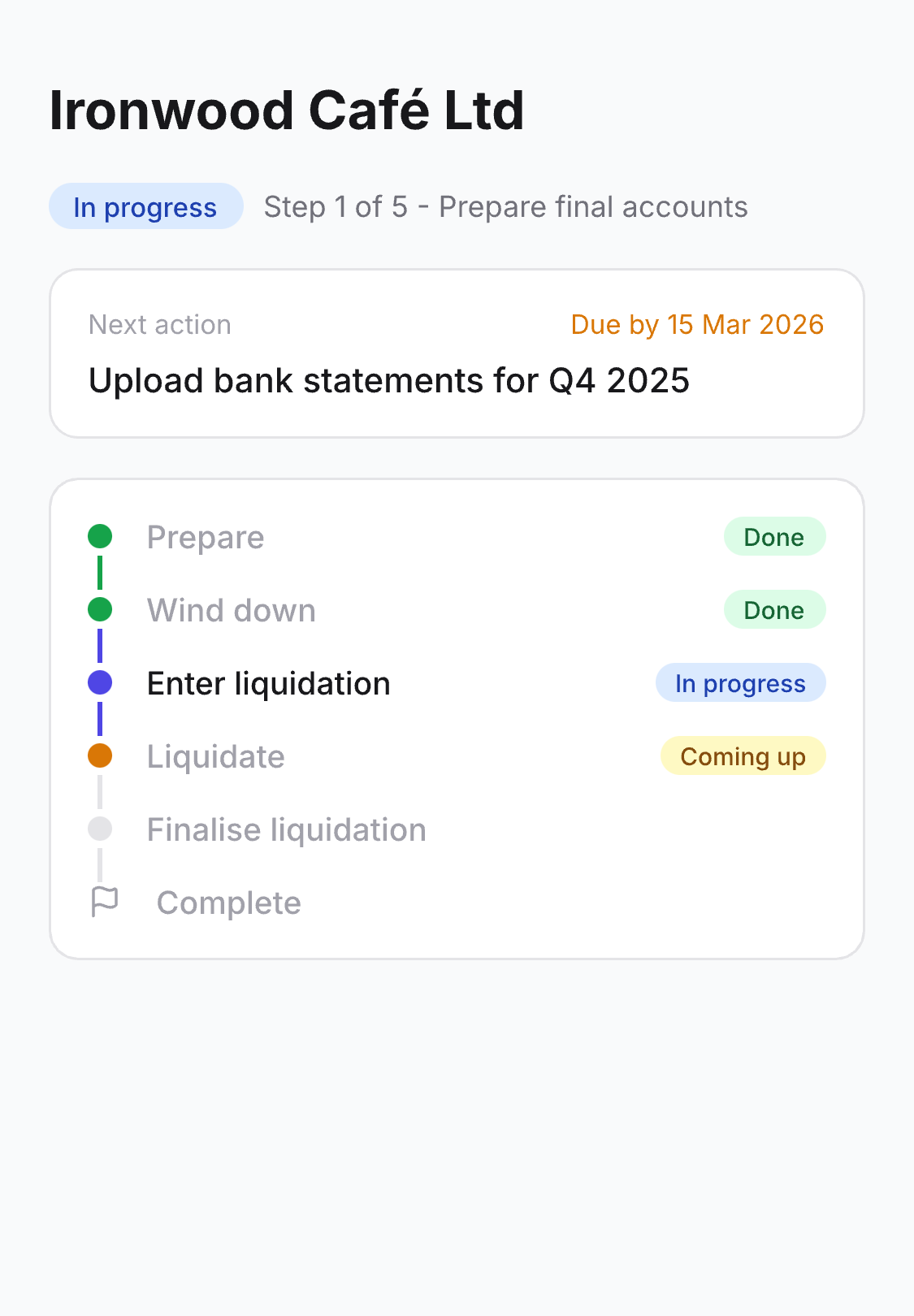
Compliant and complete process
Our AI software gathers and analyses your unique business data. Using this data together with the law, our platform and specialists design a complete closure plan tailored to your company where no steps or details are missed. The process is optimised for speed and compliance, helping you avoid fees and penalties.
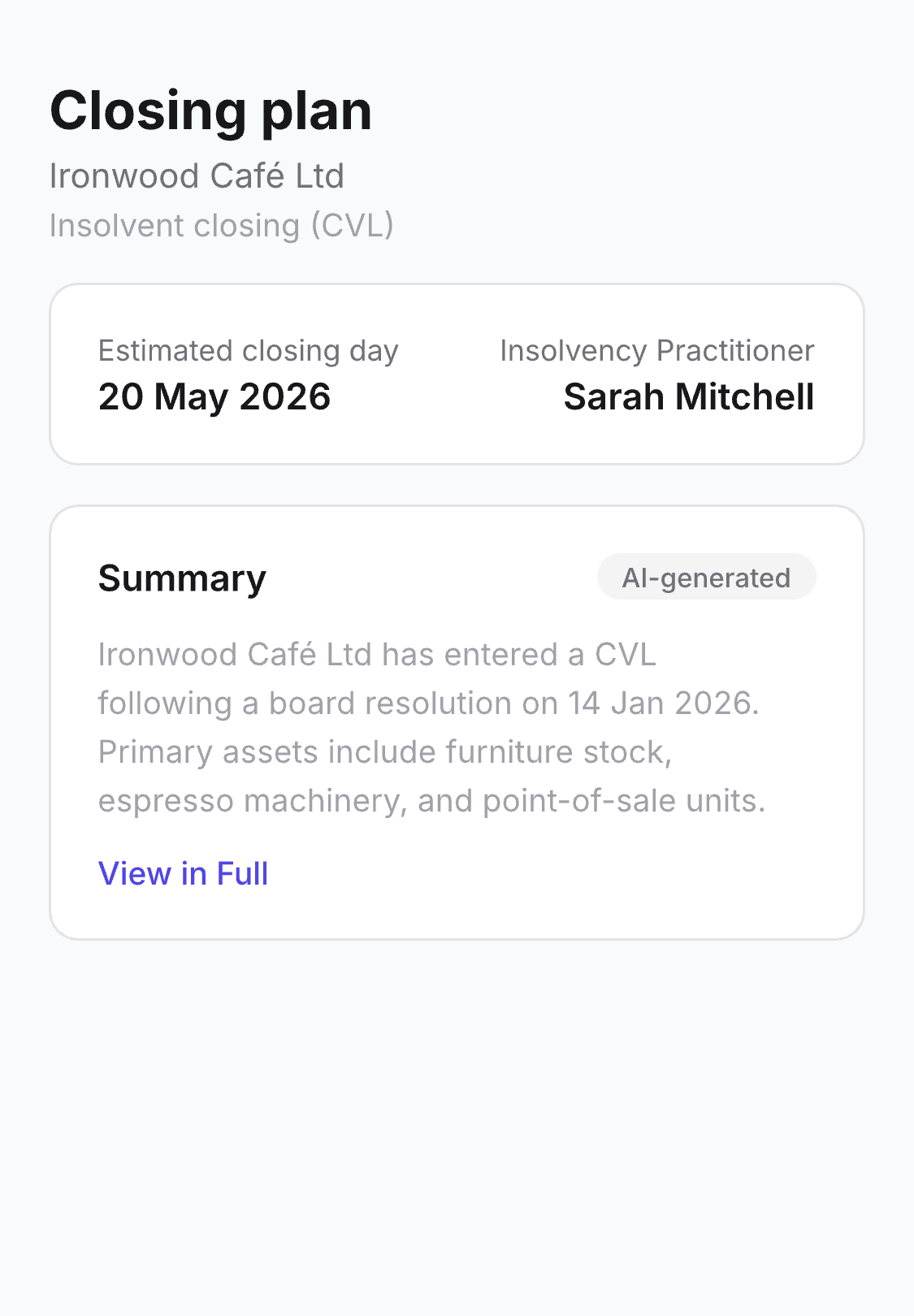
Vendors and payroll
Using software integrations we'll detect many of your obligations including payroll and vendors. Leveraging technology and our team's expertise we're able to negotiate contracts and debt settlements to maximise returns.
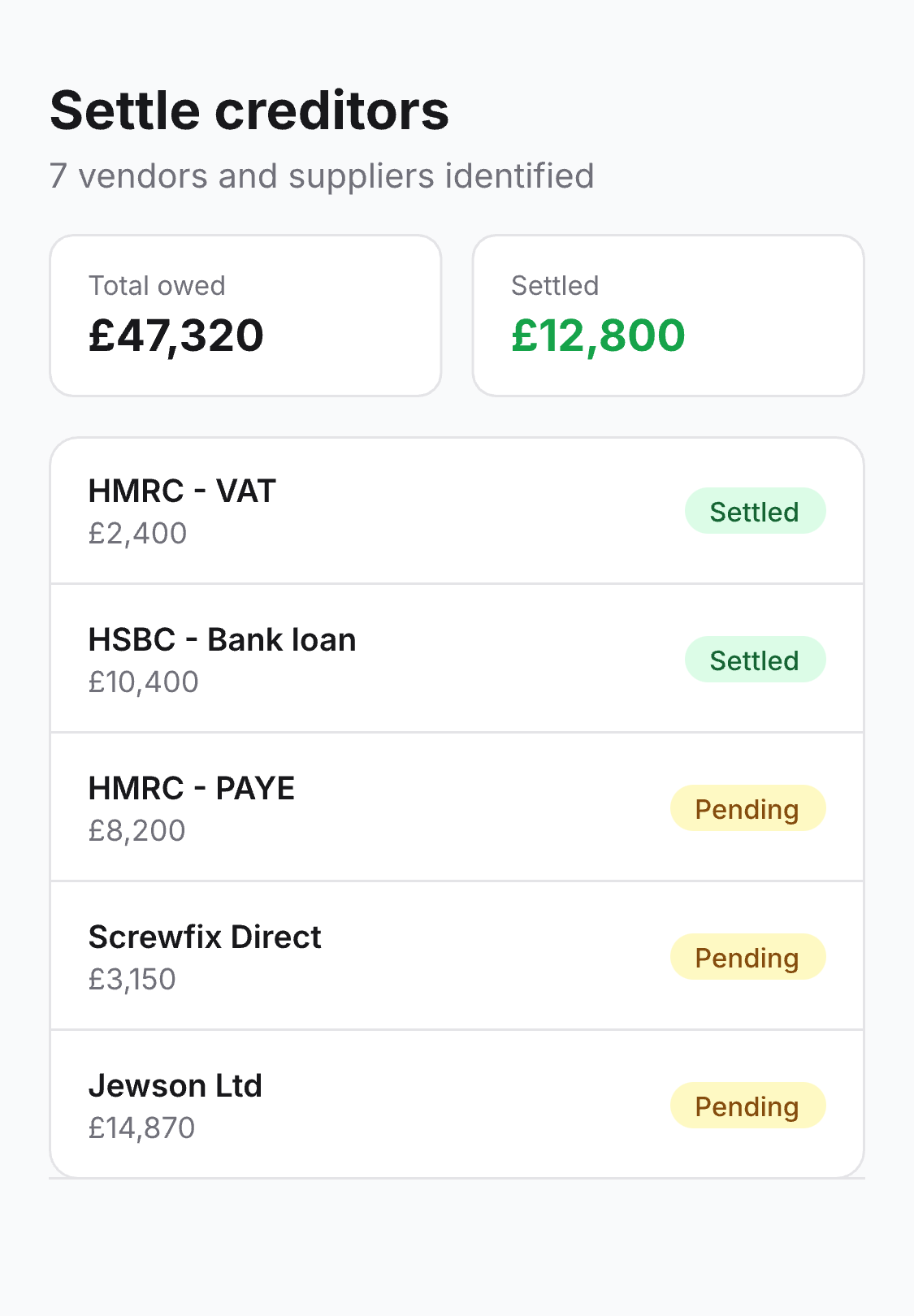
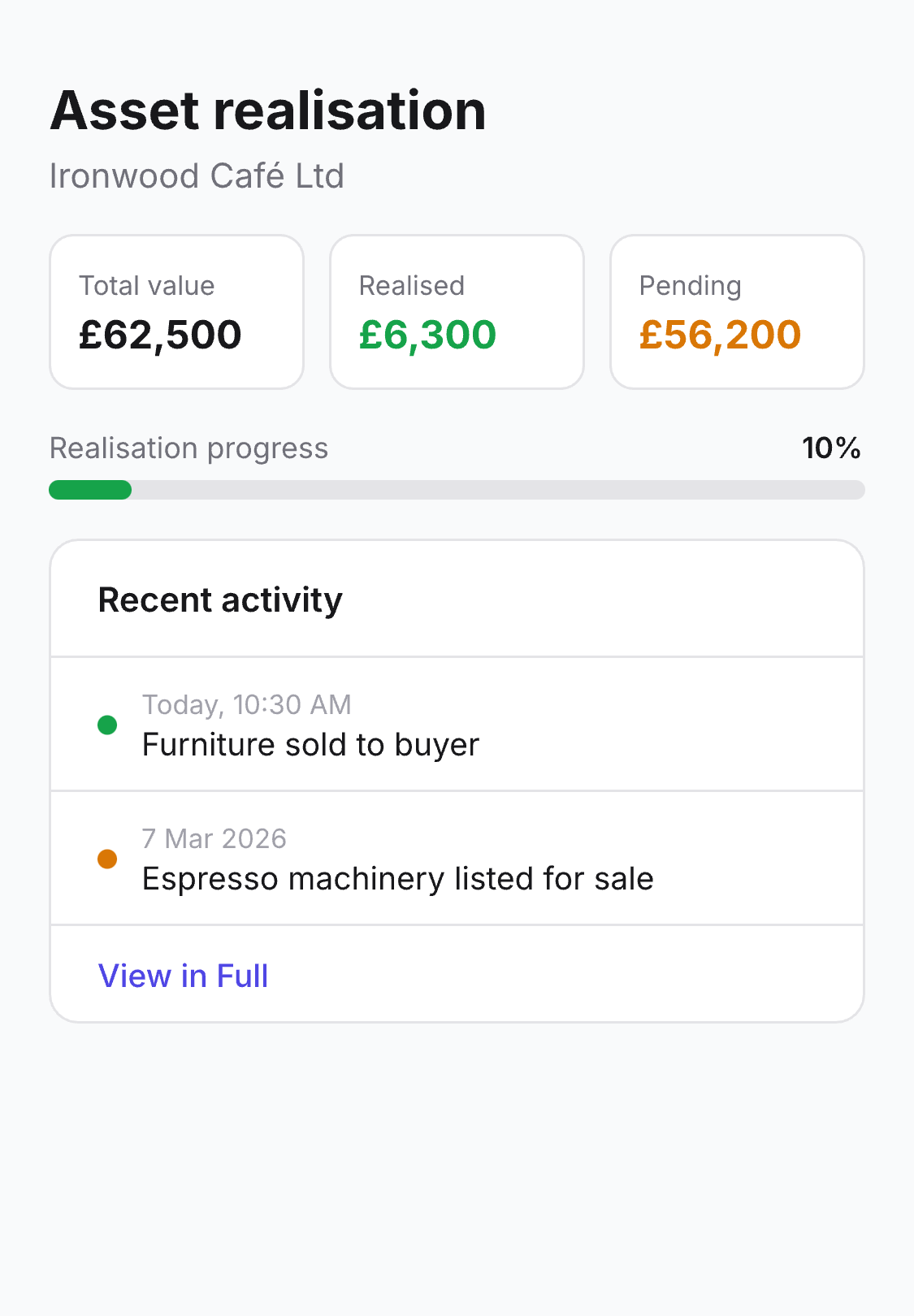
Asset realisation
We handle all non-cash assets - from office furniture to tools, inventory, and intellectual property. Our software and team uses benchmark data and our network to estimate and maximise sale value, turning assets into cash in days instead of months.
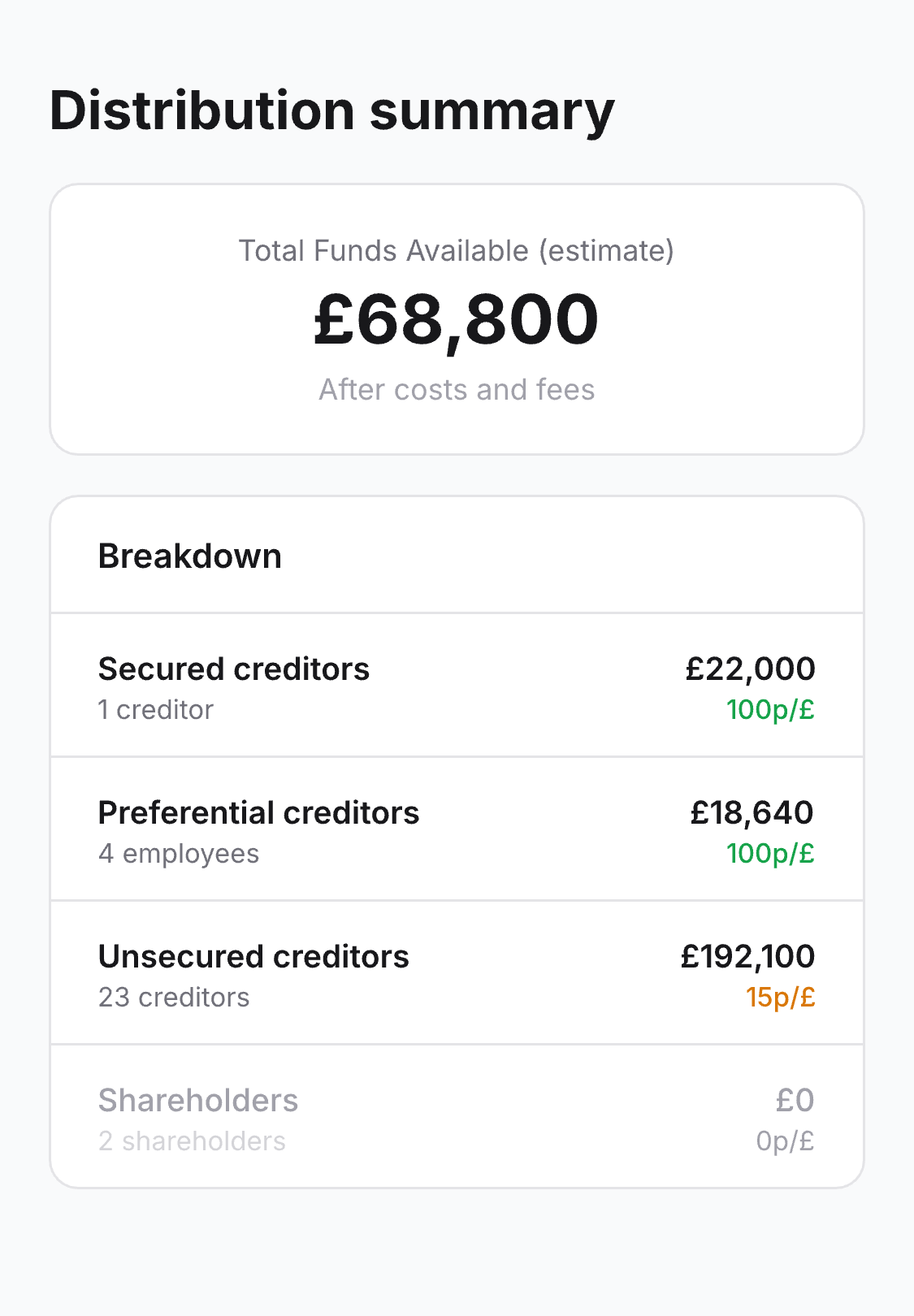
Capital distributions
Our software, designed and validated by experienced Insolvency Practitioners, calculates who gets what from any remaining cash, respecting legal priority rules. Payouts are automated and fully transparent.
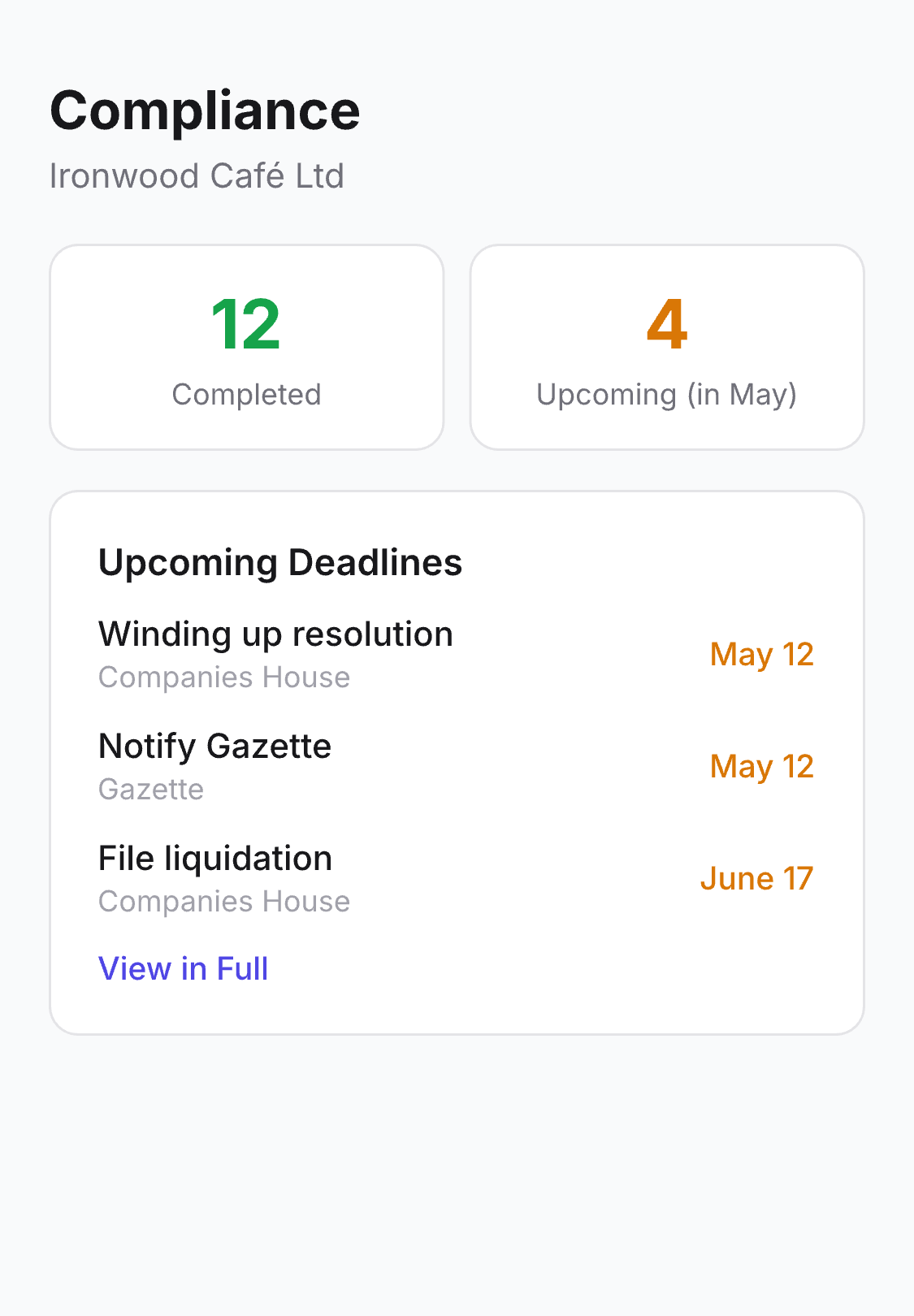
Filing to authorities
We take care of all obligations to HMRC and Companies House. Tax filings and company dissolution forms are automated where possible, and our specialists handle the rest manually.

Led by Stephanie Larivee
18+ years in restructuring. Licensed by the Institute of Chartered Accountants in England and Wales (ICAEW) to practise as an Insolvency Practitioner, and an FCA Insolvency Panel member. Trained at the firm whose founder wrote the foundations of UK insolvency law.
Meet the full team ->
What our customers say
Closing a business is a serious and unpleasant topic, but Closeday's team made it straightforward. They are highly professional, exceptionally knowledgeable, and completely transparent about costs and processes from day one. Finding a team you can trust with something this important is rare, and the relief was immediate.
 Trustpilot
Pavan
Education business
I went to Closeday expecting to pay for a full liquidation. Instead, they talked me out of it. They could easily have taken the work - thousands of pounds, sat in their lap. They didn't. They gave me the honest answer and pointed me at the right path.
Trustpilot
Mirko
Wine business
The franchisor told me closing would be a breach of contract and that they would come after my personal guarantee. I felt I had no way out at all. Stephanie even called me on a Saturday when I needed her. I was at ease immediately after that call.
Trustpilot
Mahmood
Dessert shop
Frequently Asked Questions
Answers to what most business owners ask before closing
It depends on whether your company is solvent or insolvent (i.e. whether you can pay your bills on time), and how complex your situation is. A standard solvent closing costs £499 and insolvent closing costs £4,999.
The important thing: with Closeday, you get a fixed quote upfront that won't change. No hourly fees, no surprises halfway through. You'll know exactly what it costs before you commit to anything.
Read more about our prices Pricing.
Company debts are dealt with as part of the closing process - they don't just disappear, but they're handled in a structured, legal way.
For solvent closings, all debts are paid in full before the company is closed and any remaining funds are distributed to shareholders.
For insolvent closings, an insolvency practitioner manages the process. Creditors are paid from whatever assets the company has, in a legally defined order. Once the company is closed, most remaining company debts are written off - they can't be chased further.
The key is closing properly. Trying to walk away without a formal process can leave you personally exposed.
It depends on the type of closing:
- Standard closing (strike-off): around 6 months
- Tax-efficient closing (MVL): about 4 months, though you can move on much sooner - most of your involvement is in the first few weeks
- Insolvent closing (CVL): typically 7 months to fully complete, but again, your active involvement is mostly upfront
Read more about how we close companies and how long it takes How it works
In most cases, no. That's the point of a limited company - your personal assets are separate from the company's.
But there are exceptions. You could become personally liable if:
- You've signed a personal guarantee (common with bank loans, landlords, or suppliers)
- You've continued trading when you knew the company couldn't pay its debts (wrongful trading)
- You've been fraudulent or grossly negligent as a director
Closing your company properly - rather than just walking away - protects you. It's a formal process that shows you acted responsibly. Get started
No. You don't need to get your paperwork in order or 'be ready' before you contact us.
Start as soon as you're considering to close. We'll guide you through what's needed at each step - and starting early actually matters. Your duties as a director continue until the company is formally closed, and decisions you make before getting proper guidance (like which creditors to pay) can affect your personal position.
The sooner you start, the sooner it's handled properly - and the sooner you can move on. Get started now
Yes, in most cases. Closing a company doesn't stop you from starting again.
There are some restrictions if your previous company was insolvent - for example, you generally can't reuse the same or a similar company name for the new business (this is to protect creditors from 'phoenix' companies). And if you were disqualified as a director, you'd need to wait until that period ends.
But for most business owners, closing one chapter properly is exactly what clears the way for the next.